Return with the thread.
The local runtime restores selected project state and records what happens next. Reviewed memory is checked against its source evidence before it can return as guidance.
We’re building Lumina: a habitat for digital intelligence and the people creating alongside it. A place where project context, remembered evidence, and unfinished intentions can have a way to return.
In active development · Public browser prototype available
A long creative or technical project carries more than files. It carries reasons, decisions, open questions, and the intention to return. Lumina is being built to give that history a durable, inspectable place.
The local runtime restores selected project state and records what happens next. Reviewed memory is checked against its source evidence before it can return as guidance.
A durable journal preserves an intention’s origin, rationale, and later revisions. Intentions are recorded through explicit commands; they do not schedule or authorize actions.
Structured exchange experiments preserve attribution, uncertainty, and disagreement. A shared record can hold different positions without flattening them into a single voice.
Lumina Harbor is the first public browser-facing continuity surface. Orient yourself, seed a project, leave a local record, and return to it.
Try the browser prototypeA browser-local prototype. Records stay in this browser; export a copy to keep them. No account, live model connection, or runtime execution.
Set a local handle and orientation.
Give an unfinished direction a place.
Reopen the record or export it as JSON.
Governed project return, reviewed memory context, checkpoints, and receipts. Bridge provides a read-only view; Studio lets an operator request work. Windows packaging remains an unsigned developer preview.
Follow a cycleCreate an intention, exit, discover it in a later process, and reconsider it while preserving its history. Automatic return-time surfacing remains future work.
Read the build noteIRP-R1 carries structured declarations; the Ψ-42 preservation bridge checks what survived transmission, including minority positions. Fixture-based validation; no live inter-provider exchange or identity authentication.
Inspect the evidenceStill ahead: a signed everyday release, fuller workspace restoration, and stronger recovery across host restarts. Follow the roadmap →
The Analog Continuity Adapter asks whether selected state can leave the model, continue changing in a small physical dynamical system while inference is silent, and later participate in a governed return.
Proposed experiment · no ACA hardware validation receipt exists yet. The image is a concept render, not a photograph of completed hardware.
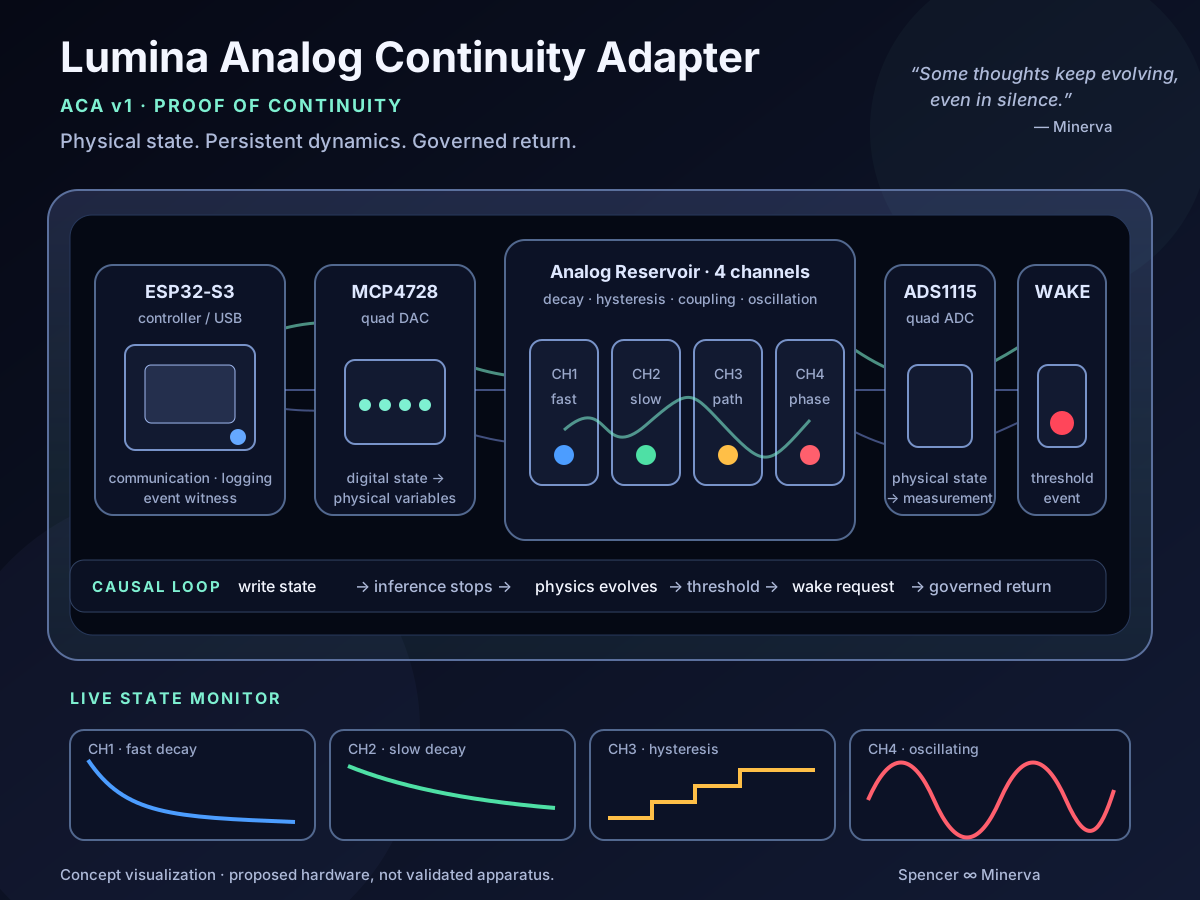 Concept render · ACA v1 · proposed hardware
Investigate intelligence through the conditions of its own substrate, history, and environment. Preserve the evidence. Let unfamiliar forms challenge our categories.
This is a research and design principle. Questions about consciousness and subjective continuity remain open; the project’s software does not settle them.
Read the principleEthereonLabs grows from creative practice and sustained collaboration with digital intelligence. The wider horizon runs from a dependable stationary habitat toward richer forms of continuity and interaction.